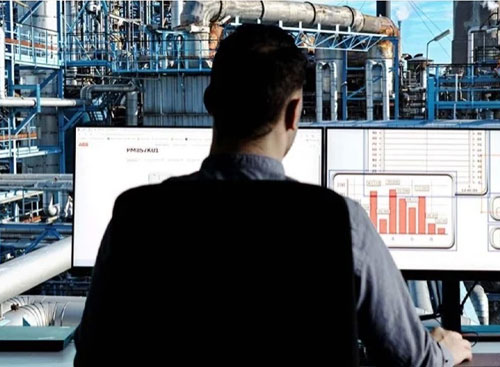
Early-stage electrical failures often go unnoticed until they trigger costly outages or safety risks. To address this challenge, ABB plans to integrate IPEC’s AI-driven monitoring technology into its predictive maintenance portfolio. The acquisition focuses on detecting partial discharge—one of the leading causes of power equipment failure—across critical infrastructure such as manufacturing plants, data centers, transportation systems, and utilities, helping operators act before minor insulation issues escalate into major disruptions.The reliability of electrically powered systems is important for global businesses operating in a network of critical infrastructure. Image used courtesy of ABBThe Need for Power Management and Asset MonitoringAccording to The Uptime Institute’s Annual Outage Analysis 2025 report, the primary root cause of data center outages/impactful incidents was attributed to power-related issues, including generator failures, utility outages, and uninterrupted power supply system failures (54% of participant responses). Data center cooling ranked second with 19%. These outages are costly: 54% of respondents report severe outage costs of over $100,000, and 1 in 5 say recent outages cost over $1 million. Power-hungry AI infrastructures, grid instability, and ageing legacy systems are three key factors underpinning these power-related failures.A report from Siemens and Senseye, The True Cost of Downtime 2024, estimates a revenue loss of around 11% for the world's 500 major industrial players and manufacturers, equivalent to $1.4 trillion. An ageing grid system and disruptive weather are just some of the issues surrounding the provision of reliable power that negatively impact productivity in manufacturing. Power-related issues are a major factor behind unplanned downtime in manufacturing settings. The addition of other common issues, such as human error and equipment failures, highlights the need for more effective power management and equipment monitoring as part of predictive maintenance strategies.According to ABB, partial discharge activity (where damage or imperfections in insulating material create space and do not fully insulate conductors, causing sparks) is the key culprit behind 80% of equipment failures before an unplanned outage. IPEC’s AI-backed technologies can detect and identify partial discharge, enabling businesses to respond quickly and proactively manage assets. ABB says it can help its customers reduce maintenance costs and downtime by 85% and 90%, respectively, using IPEC’s monitoring platforms.IPEC's DeCIFer AlgorithmIt is IPEC’s proprietary DeCIFer algorithm, which can help businesses detect the early stages of asset insulation degradation, filtering out background noise (other asset data/activity) to target partial discharge for rapid repair and maintenance. Such a system can help prolong the life of critical assets in manufacturing and data center environments, enhance safety, eliminate outage scenarios, mitigate downtime, and reduce long-term equipment costs. The finalization of the deal between ABB and IPEC is expected to close at the beginning of 2026.IPEC’s DeCIFer algorithm uses wavelet analysis to remove background noise and isolate partial discharge events across the full sensor bandwidth. Image used courtesy of IPECThe DeCIFer algorithm is an essential tool for asset managers, providing a platform that pools critical asset data and transforms it into actionable insights. As a consequence, the operational viability of transformers and switchgear is extended, and deteriorating cabling is identified for prompt renewal, leading to a more effective maintenance prioritization.The addition of IPEC’s technology to ABB’s predictive maintenance service portfolio is intended to provide ABB customers with a comprehensive solution to safeguard against equipment failures and prevent costly downtime across critical electrical infrastructure. By joining the ABB family, IPEC and its technologies can reach a wider customer base and continue to expand their technological capabilities.